
It would be a good idea to create independent oversight committees for each regulatory institution and indeed, even for their appellate bodies, says A K Bhattacharya.
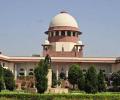
'Experience of administration may make a member of civil service a good administrator but not necessarily an able and impartial adjudicator,' observes the Supreme Court.

US e-commerce giant Amazon has written to the independent directors of Future Retail Limited (FRL), including Gagan Singh, Ravindra Dhariwal and Jacob Mathew, and its audit committee, providing data and alleging that there have been significant financial irregularities to the prejudice of public shareholders, banks, creditors, and third-party suppliers. Amazon has said this warrants a thorough and independent examination of all relevant facts and related-party transactions, including of past financial years, by an independent agency. Separately, Amazon has written to Securities and Exchange Board of India Chairman Ajay Tyagi, seeking the withdrawal of the regulator's conditional approval granted to FRL related to the merger deal between the Future group and Reliance.

Has the Modi government been more at odds with institutions than other governments? There is no doubt that there have been more run-ins. While the RBI and CBI cases have drawn attention, there have been others, less publicised, Subhomoy Bhattacharjee points out.

The autopsy, which was based on blood and urine samples and released by the Buenos Aires Scientific Police, said Maradona had problems with his kidneys, heart and lungs.

Tension between the government, specially the finance ministry, and RBI is as old as the central bank itself.

The Central Electricity Regulatory Commission (CERC) has said the first 660-Mw unit of Reliance Power's 3,960-Mw Sasan ultra mega power project (UMPP) could not achieve its "full load" in March 2013 and rejected the company's plea to appoint an independent technical committee to look into the readiness of that unit.

13 eminent economists, including former RBI governor Raghuram Rajan and current International Monetary Fund Chief Economist Gita Gopinath, in a report have asked the political establishment not to resort to populist tricks.

Private equity (PE) is set to play a bigger role in banks. Of 21 recommendations accepted by the Reserve Bank of India (RBI) out of 31 made by its Internal Working Group (IWG), its stance on non-promoter holdings in private banks is seen with excitement, though it doesn't refer to PEs explicitly. On non-promoter holdings in these banks, the RBI said this will be capped at 10 per cent of the paid-up voting equity share capital in the case "of natural persons and non-financial institutions and entities"; and "at 15 per cent for all categories of financial institutions, entities, supranational institutions, public sector undertaking, or the government." While this is a modification of the IWG's stance for the non-promoter holding in banks at up to 15 per cent, it does open up a huge window for PEs, all the same. This is because, while the RBI has remained silent on the eligibility of industrial houses for bank licences, fresh high-quality capital in large amounts can only come from PEs.

If indeed the issues involved between the government and RBI are of immense public interest, why not make public the arguments of both the government and the RBI, irrespective of the outcome of the process, says Tamal Bandyopadhyay.However, the Act is silent on what happens if the governor's views differ from that of the government. If Patel does not want to budge from his stance the government can either see merit in the Governor's arguments and decide against going ahead with its plan or overrule him. My guess is that the issues raised by the government need to be sorted out not at the November 19 board meeting but between the Governor and the government, says Tamal Bandyopadhyay.

News of all that's transpired on and off the football field

Its order also includes a direction for the channel to broadcast a statement of Ofcom's findings on a date and in a form to be determined by the watchdog and also for KTV not to repeat the music video or the discussion programme found in breach of its rules.

CAG audit is likely to be completed in six months.
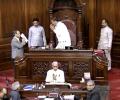
'The Gogoi episode can lead to our evolving a rational way to get better people who will head our checks and balances of democracy,' says former Chief Information Commissioner Shailesh Gandhi.

The real estate Bill will stamp out illegal practices prevalent in the industry.

Experts say the trend is worrying as it could take a toll on the pace of equity flows and also hinder the penetration drive of the Rs 24-trillion MF industry.

If raters get away by moving from AAA to D overnight after companies default, as happened with DHFL, YES Bank, RCom, and IL&FS, it shows a complete breakdown in the rating system. It calls for exemplary punishment, not kid glove treatment, says Debashis Basu.

'Everything will be decided by the Centre.' 'Universities will have no autonomy to start a new course or introduce a new syllabus.'

Some regulators are already unleashing their own algorithms to track and understand pricing software of e-commerce companies. While companies collude on pricing, governments are collaborating on curbing online malpractices. The legal liability of an algorithmic decision will be interpreted as legal liability of an entity of an individual. Anti-trust activities of algorithms will not go unchallenged in any economy.

There are allegations of involvement of Kochhar and her family members in a loan provided to Videocon group on a quid pro quo basis.

After Chanda and Deepak Kochchar, the Kudvas are the second power couple in the financial world to come under the regulatory glare.

On paper, only 8,000 villages remain to be electrified in the country, but the situation on the ground shows euphoria over numbers is misplaced

Currently, most crowdfunding platforms neither operate with proper authorisation nor are governed under any law.

Xi Jinping is winning the war without firing a shot in Sri Lanka, observes Colonel R Hariharan (retd).

Ignoring objections by political parties, the government on Friday introduced a bill in Lok Sabha to clear legal hurdles in appointment of former Telephone Regulatory Authority of India Chairman Nripendra Misra who joined as principal secretary to Prime Minister Narendra Modi more than a month back.

Favouring independent regulators for railways and road sector, Planning Commission deputy chairman Montek Singh Ahluwalia on Friday stressed on the need for proper policy framework defining the role of these monitors.

Some of the key proposals of the agenda relate to transforming the banking sector, addressing agrarian distress, countering hate crimes and discrimination, and spurring employment generation.

The finance ministry has put out a revised draft in public domain.

News of all that's transpired on and off the football field.

Pragmatism and flexibility is a virtue. An untethered and short-term approach to policymaking is a flaw, argues Mihir S Sharma.

News of all that's transpired on and off the football field

This gains importance in the backdrop of speculation on a second term for Raghuram Rajan.
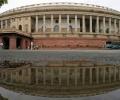
The Financial Sector Legislative Reforms Commission had in a report last year proposed a unified regulator for the entire financial sector -- markets, insurance, commodities and pension. It had, however, proposed to keep banking out of its purview for now.

Amid India slipping to 134th spot in the ease of doing business ranking of 189 nations, Planning Commission member Arun Maira on Tuesday said "merely making comparisons" is not enough to improve business conditions.

'Agri reforms need to go beyond the limited concerns of these three laws in improving agriculture productivity in cereal and crop diversification and production patterns.'

Power plant load factors are at historic lows of around 60 per cent.

Instead of mechanically consolidating all labour laws into one, provisions of all labour laws should be relooked in terms of their substance. The irrelevant and archaic provisions have to be fixed, says Aparajita Gupta.

'Some cases do not get a single hearing for 6 to 8 months, while some have been pending for as long as 8 years.'

Telecom operators, including Reliance Jio, have been demanding "same service same rules" regime which means that mobile applications providing calls and messaging services should also be made to comply with set of rules that are mandatory for mobile service providers.

PS banks need to pull up their socks to improve cash flows.
 © 2026 Rediff.com - Advertise with us - Disclaimer - Privacy Policy - Sitemap - Feedback - About us - Terms of use - Grievances